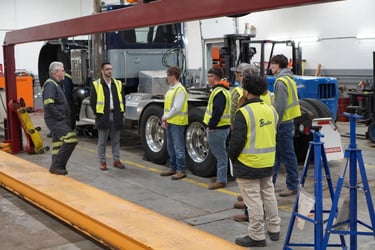

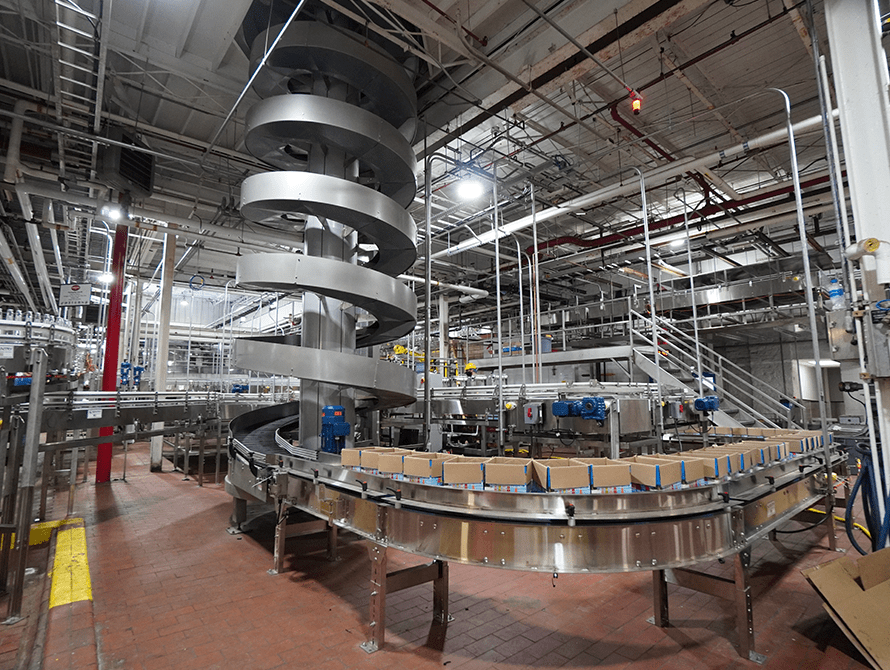

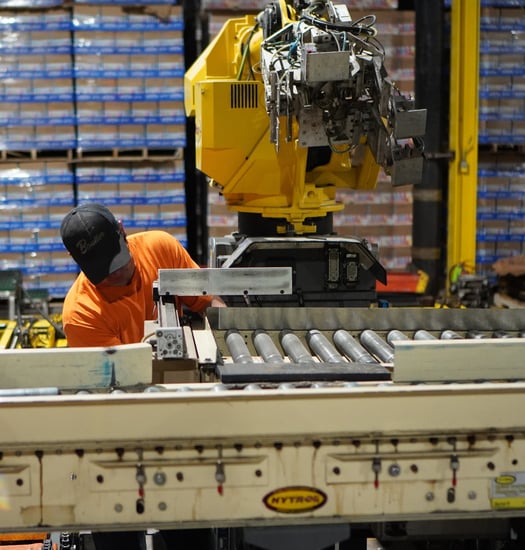
OEMs (Original Equipment Manufacturer) are experts at what they do best, designing, engineering, and building complex production equipment and machinery. That is the core value they bring to their customers. For many OEMs, the biggest friction point does not come from engineering or manufacturing. It shows up downstream in post-production logistics. Crating, rigging, transportation coordination, and installation support often become the unplanned bottleneck in otherwise well-run programs.
The challenge becomes even more apparent in repeat programs. The same machines are built. They are shipped to similar destinations. The handling requirements are largely the same. Yet too often, each move is treated like a brand-new project with new quotes, new vendors, new assumptions, and new risks every time.
That is why more OEMs are moving toward a partner-based approach and turnkey logistics. Instead of stitching together multiple vendors for each shipment, OEMs are looking for ways to reduce friction, limit risk, and remove operational workload from their internal teams, especially when programs repeat month after month.
What “Turnkey Logistics” Actually Means for OEMs
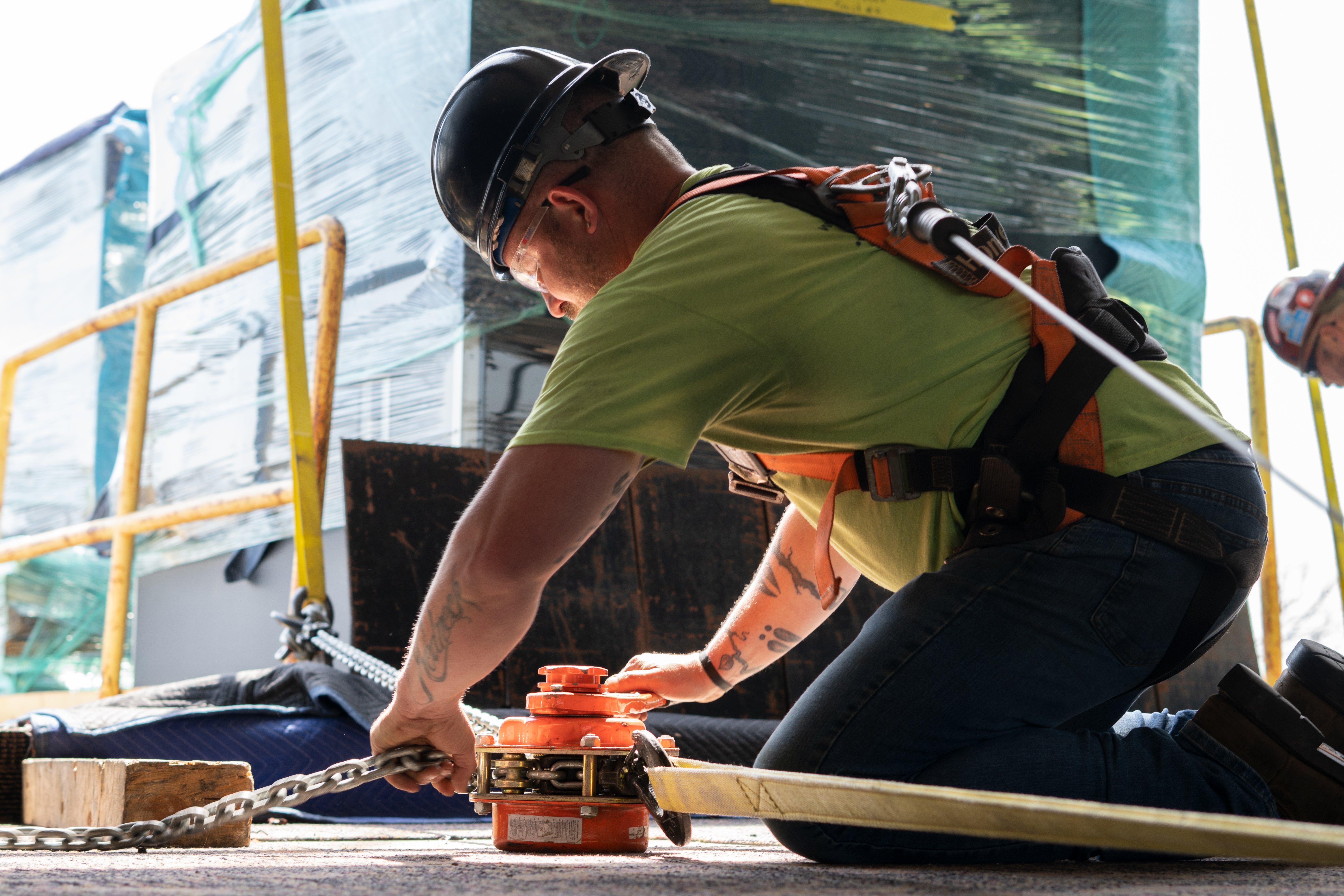
In a turnkey logistics model, OEMs work with a single partner who manages the entire physical movement of equipment from build to install. Instead of coordinating separate crating companies, rigging crews, heavy haulers, and installation support, one partner owns the process END to END.
For many OEMs, this includes:
- Custom crating and packaging designed around the equipment
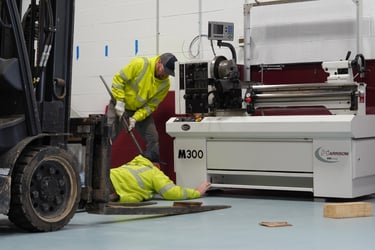
- Rigging equipment and crews familiar with the machinery
- Transportation coordination and load planning
- On-site installation or assisted installation support
The value is not just convenience. It is consistency. When one partner is responsible for the logistics chain, processes become repeatable, communication improves, and scope gaps are reduced. Over time, logistics becomes a defined part of the OEM’s program structure rather than a last-minute scramble.
Why OEMs Are Making the Shift
Standardization Across Repeat Programs
-
Turnkey logistics allows OEMs to standardize how their equipment is handled from project to project. Crating designs become repeatable. Handling methods are refined and documented. Crews become familiar with the machines, lifting points, and installation constraints. The result is fewer learning curves and more predictable outcomes across repeat programs.
Faster Quoting and Program Planning
-
When logistics is treated as part of the program, not a one-off transaction, OEMs can define scopes upfront for repeat equipment. This leads to more predictable pricing models and significantly less back and forth during each sales cycle. Instead of rebuilding the logistics plan every time, OEMs can move faster and quote with more confidence.
Lower Risk and Fewer Surprises
-
Every handoff between vendors introduces risk. Separate crating, freight, rigging, and install providers can create gaps in scope, miscommunication, and finger-pointing when something goes wrong. A turnkey model reduces these handoffs. With one accountable partner from dock to install, OEMs see fewer mistakes, better damage prevention, and improved site readiness at the customer facility.
Better Customer Experience
-
When logistics run smoothly, the OEM looks more complete and professional. End customers experience cleaner deliveries, smoother installs, and fewer last-minute disruptions at their facility. In many cases, the logistics experience becomes part of how customers evaluate the OEM, not just the performance of the equipment itself.
What to Look for in a Partner
Not all logistics partners are built to support repeat OEM programs. When evaluating a turnkey partner, OEMs should look for:
- Proven experience with industrial equipment and production machinery
- The ability to design repeatable crating standards across all equipment
- Rigging and packaging capabilities under one roof
- Strong project capabilities and consistent communication
- A partner ready to act as an extension of your project team
- Demonstrated success supporting repeat programs, not just one-off moves
The right partner does not just move equipment; they help OEMs build a repeatable logistics process around their legacy production programs.
The Strategic Shift
When logistics are built into the solution, OEMs gain a real competitive edge. Delivery timelines become faster. Installs become more predictable. Friction for end customers is reduced. Turnkey logistics also becomes a value add in the sales process. OEMs can position themselves as more complete solution providers and help customers simplify their own vendor stacks. When installation and logistics concerns are addressed earlier in the conversation, late-stage objections around scope, coordination, and downtime become easier to overcome.
From Vendor Stack to a Strategic Partner
OEMs are increasingly moving away from fragmented vendor stacks where crating, rigging, freight, and install support are all handled separately. In their place, long term logistics partnerships are becoming the model for repeatable programs.
The more repeatable the program, the more valuable turnkey logistics becomes. Instead of treating every shipment like a one off event, OEMs can build consistent, scalable logistics processes that support growth, reduce internal strain, and deliver a better experience to their customers, project after project.

Dan joined Boulter in 2025, bringing a strong background in industrial machinery, automation, and robotics. Having spent his career on the same side of the table as many of Boulter’s customers, he brings a valuable, first-hand perspective to his role. As a Marketing & Business Development Specialist, he focuses on building meaningful customer relationships and telling the stories behind the work.